The truck in 3D
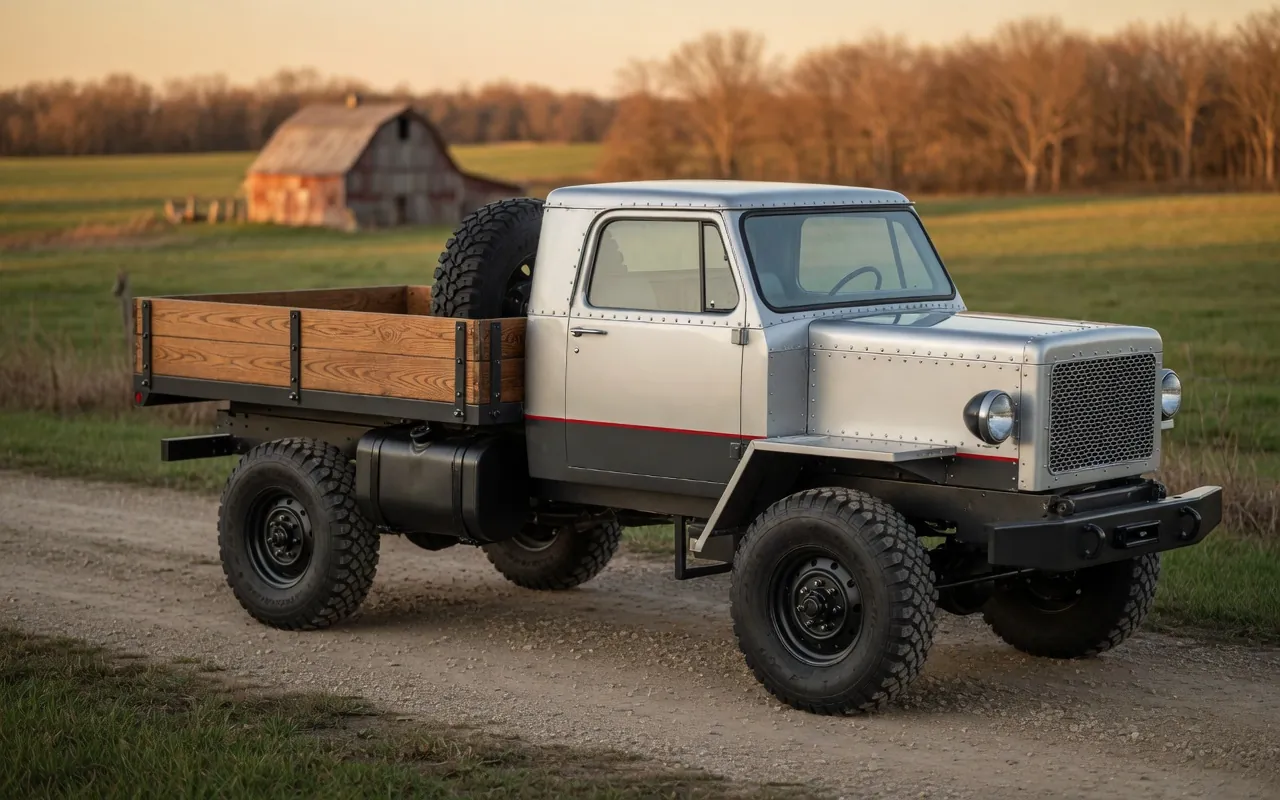
The same flat-panelled farm truck on a used diesel: a 1996–97 Cummins 5.9 12-valve with its mechanical injection pump, an NV4500 five-speed and an NP241 transfer case, full-float Dana 60 and Dana 70 axles on 35 inch tyres. Steer it with the slider, twist the axles, or lift the body off to see the engine and both driveshafts. A design in progress — nothing is built.
Why a used engine. A new crate diesel has no road certificate for a homemade truck; an engine pulled from a titled truck, kept the way it was certified, is the legal path — and the 12-valve is the last big Cummins with a mechanical injection pump: no computer on the fuel, no particulate filter, no exhaust fluid. The paperwork comes first: a letter to the EPA and to the state's Vehicle Research Unit before a donor is bought.
What the diesel changes. The oil pan has to clear the front axle at full bump, so the hood rises about 310 mm and the roof 270. The track widens to 1,740 mm for the 35s, and the frame sits 115 mm higher. It is about 700 kg heavier than the electric truck, which leaves only about 490 kg of payload at the rating the electric truck carries — a higher rating is a decision still open.
Fuel on the outside. A 56 gallon side-saddle tank hangs outside the left frame rail behind the cab, with a steel toolbox outside the right one — parts picked from an image model's idea of this truck, then checked into the design. About 750 miles a tank at an assumed 15 mpg.
The steering. A box on the left rail, a 270 mm pitman arm, a drag link to the left knuckle and a tie rod behind the axle — the slider moves them the way the checked model does. The weak point is the front driveshaft: at full droop it runs steeper than a plain universal joint likes, so the design wants a double-cardan shaft or a part-time front.
The clearance check ran through the whole steering sweep and both axle twists; no part passes through another. What it does not show: strength, the springs, the brakes, the exhaust. The figures are estimates from the design, not a weighing.