The diesel straddler
Tractor 1D is the strawberry straddler with a diesel heart: the same bridge over two rows, the same cab, spherical tank and 48 foot boom — but the spray mix rides low in the legs, in two tanks between the wheels, while a 55 kW diesel, its fuel and its hydraulic oil ride up on the bridge behind the cab; a hydraulic motor in every wheel, and all four wheels steering. The boom rides at the front. Steer all four wheels with the slider, flip the boom tips, or hide the tanks to see the frame.
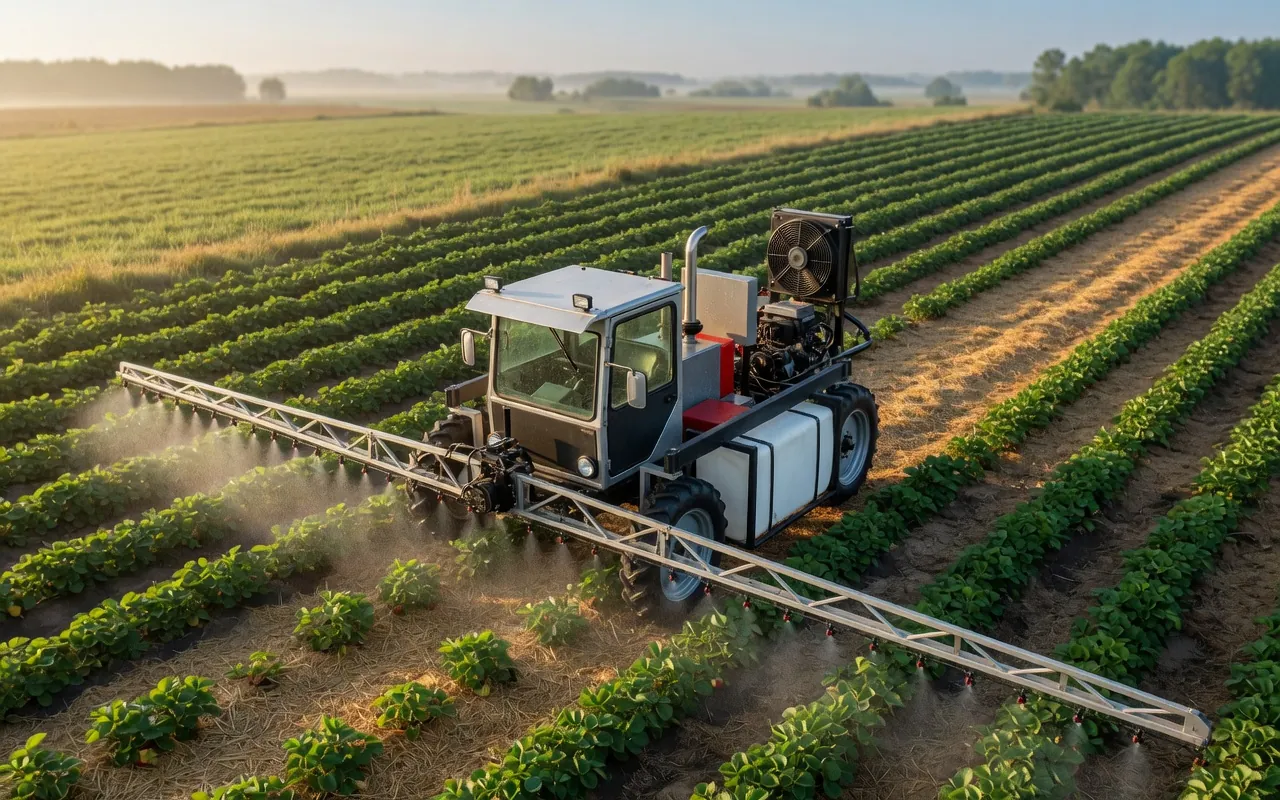
Why a diesel. The electric straddler runs on two battery boxes that also back up the house. This one is for a farm that wants a day's spraying from a jerry can: about 1.3 gallons an hour spraying, perhaps seven gallons in a full day of spraying and refilling. The engine is a 55 kilowatt Kubota — just under the size that would need exhaust fluid — and it rides up on the bridge behind the cab with its fuel and hydraulic oil. The heaviest thing on the machine, 300 gallons of spray mix, rides low instead: two tanks, one in each leg between the wheels. Put the corn posts in and the bridge climbs, but the tanks stay down.
A motor in every wheel. The engine turns one hydraulic pump, set by a plain lever, and the oil drives a two-speed motor in each wheel — the way the French vineyard straddle tractors have worked for decades. A slow range for spraying, a fast one for the road, and a valve that stops one wheel spinning away the oil from the others. A separate small pump drives a self-priming spray pump on the bridge, which draws from both leg tanks and fills them from the nurse trailer.
Four wheels steering. A caster can't be driven, so all four wheels steer: about thirty degrees each way, the rear opposite the front, for a turn of about three and three-quarter metres at the outside wheel. Each wheel hangs from a kingpin under a beam that runs over the tyres, and each has its own steering cylinder — a rod across the machine would hit the cab, or the corn.
Picked from a picture. This machine's details came from an image model's idea of it, then went back into the checked design: the radiator stands up high at the back with a big fan, breathing clean air above the spray and the straw; the exhaust rises in a stack above the cab roof; the fuel tank sits up behind the engine; each spray tank is held down by two steel straps, so it lifts out like a part; and the cab has a visor, work lights, mirrors and a step.
The boom in front. On the electric machine the boom rides behind; here it rides in front, where the operator can see it, and it balances the machine: full, the weight splits about 56 to 44 front to rear, and all four tyres pull. Like the electric machine's, the boom is a bolted aluminium truss. On the road the wings fold back along the legs and their tips flip up and forward over them.
Full, it weighs about 3.5 tonnes and would lean about 56 degrees before tipping sideways — 49 with the corn posts in, because the spray mix no longer climbs with the bridge. On the road it is about 11 feet wide and 13 feet long. These are estimates from the design, not a weighing.
What it does not show: the steering cylinders and hoses, the exhaust, the cooling fan's duct, strength, the rollover structure's test, the boom's own structure, or how it rides at speed. The riskiest part on paper is the oil: a hydraulic drive at walking pace in spray-laden air needs a cooler with its own fan and clean air.