The drone tender in 3D
A double-deck trailer for a spray drone. The drone takes off and lands on the upper deck, above the crop, where the pilot can see it; below are the water, the chemical inductor, a generator and one Drumlin battery box to charge its packs. It rides on the nurse trailer's surge-braked axles and stays under 7,000 pounds. Run each tyre over a bump, raise the rails and drop the step, or hide the flight deck to see what lies beneath. A design in progress — nothing is built.
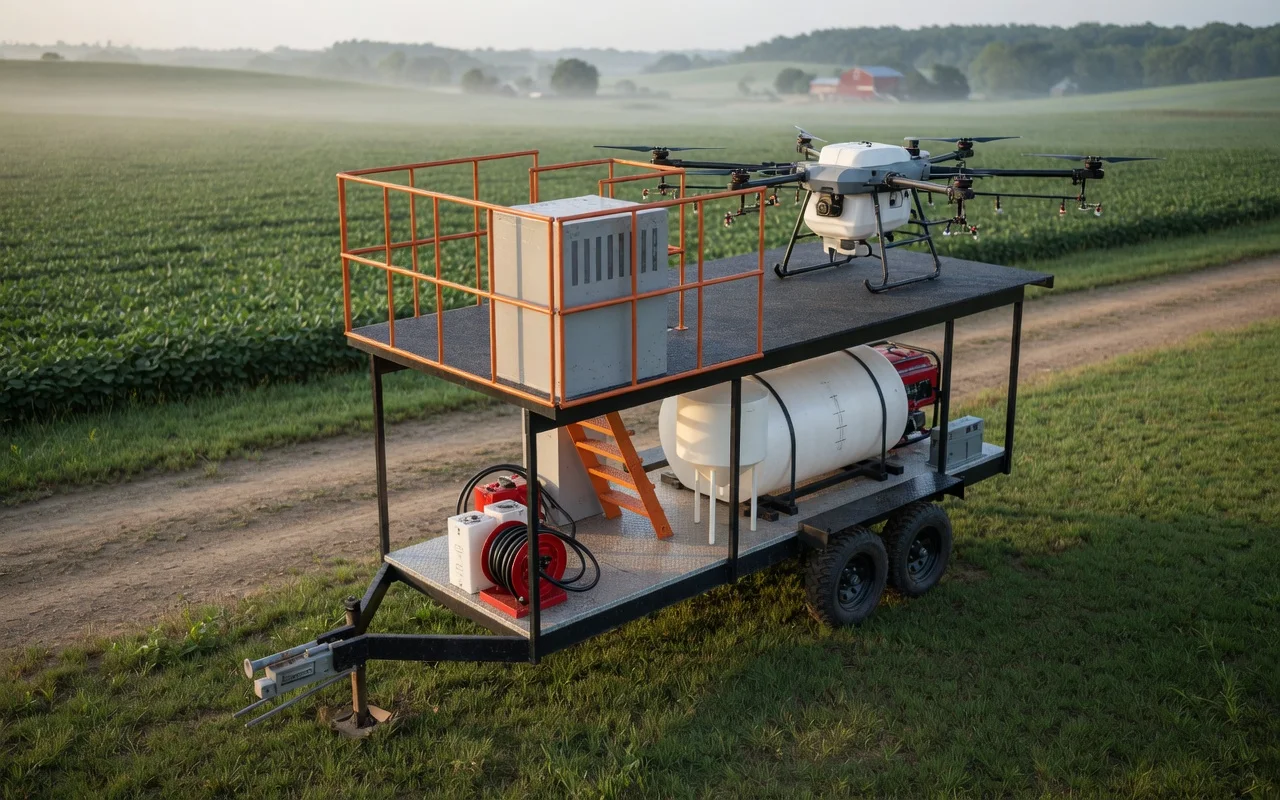
Why a deck up high. Spray drones are flown by sight. Standing on a deck 7½ feet up, the pilot sees over tall corn and a berry hedge, and the drone lands where the ground crew can swap its tank and battery in a minute without walking into the crop. Commercial drone trailers put the deck on top the same way; most are 22 feet long with a 32-foot deck and weigh 14,000 pounds — too much for a pickup this size.
Kept light on purpose. An 18-foot deck on two 3,500-pound axles, aluminium plank on the lower deck, 2 × 3 steel crossmembers and one battery box instead of two brought it from 4,600 to 3,900 pounds empty, so it carries its full 300 gallons and stays under its 7,000-pound rating in every loading, with 10–15 % of its weight on the hitch. The axles had to land within a 40 mm window to do that; the tongue is weighed before the hangers are welded.
Power for the batteries. A drone's day of spraying takes about 70–80 kilowatt-hours of charging. A 240-volt inverter generator carries the spray day; the Drumlin battery box and its inverter run the lights and the pump and charge quietly when the generator is off. The generator stands on the opposite corner from the chemicals, and the chargers sit in a vented metal locker on the deck.
Which truck. For custom spraying within about 50 miles, the diesel tows it — the electric truck's towing is farm-only, 35 mph and local roads, and its pack would not bring it home from a 100-mile round trip. The electric moves it around the farm.
What it does not show: spraying for hire takes more than the trailer — FAA Part 107, a Part 137 operator certificate and an exemption for drones over 55 pounds, and a Wisconsin commercial applicator's aerial certification and business licence. The masses are estimates; the stability is a static screen, not a tilt test; the plank's span where people walk is still to check.