The battery box, docking
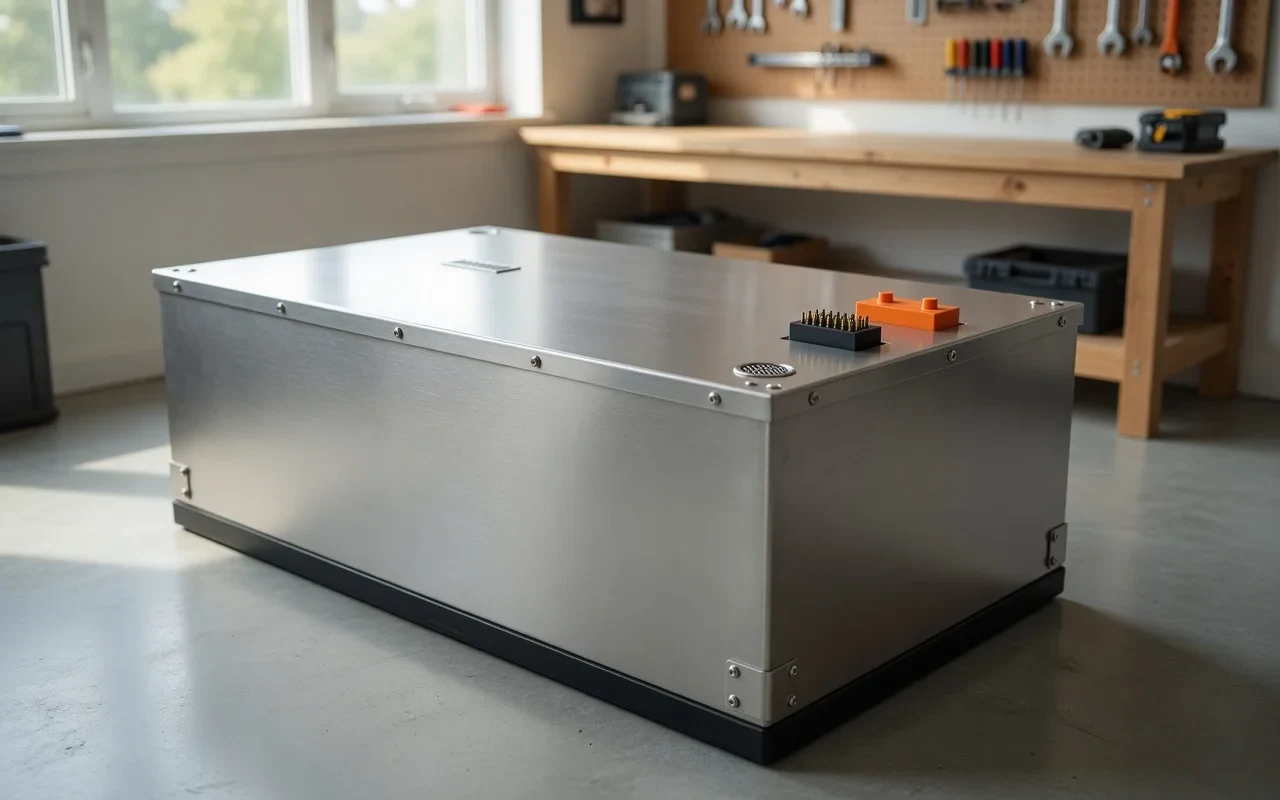
One Drumlin cell box — sixteen cells, 14.3 kilowatt-hours, about 142 kilograms — lifting off its trolley into the bay under the truck. Step through the dock, or hide the stainless case to see the cells, the copper and the spring stacks that hold them.
The order is the safety. Two tapered guide pins enter the box first, while the connectors are still well apart. Then the power and signal connectors meet — at zero current, because the truck's contactors are open and the service disconnect is out. The contact that tells the truck a box is present closes last, and only when the box is fully home. In the last eight millimetres four strikers on the box's corner posts enter four latches, and each latch shows a flag when it is shut.
The latches are ordinary car-door latches — a part the door-latch standard (FMVSS 206) already rates at 9,000 newtons in exactly the direction the box hangs. Any three of the four hold the box with a wide margin.
Built for a crash. Revision E is drawn to hold the loads the crash rules set for a truck of this weight: 10 g fore and aft and 5 g sideways. At 10 g the end cell, pushed by the seven behind it, sees just under the 10 kilonewtons the cells are rated for. The same revision took the box under its weight target.
What it does not show: the box has not been built or tested, and the crash figures are hand calculations, not a sled test.